
FIQH
Essentials of Islam
A structured introduction to the five pillars — purification, prayer, fasting, zakat, and pilgrimage — according to the Shafi’i school.
Explore →Traditional Islamic education — jurisprudence, spiritual wayfaring, and the living prophetic tradition.
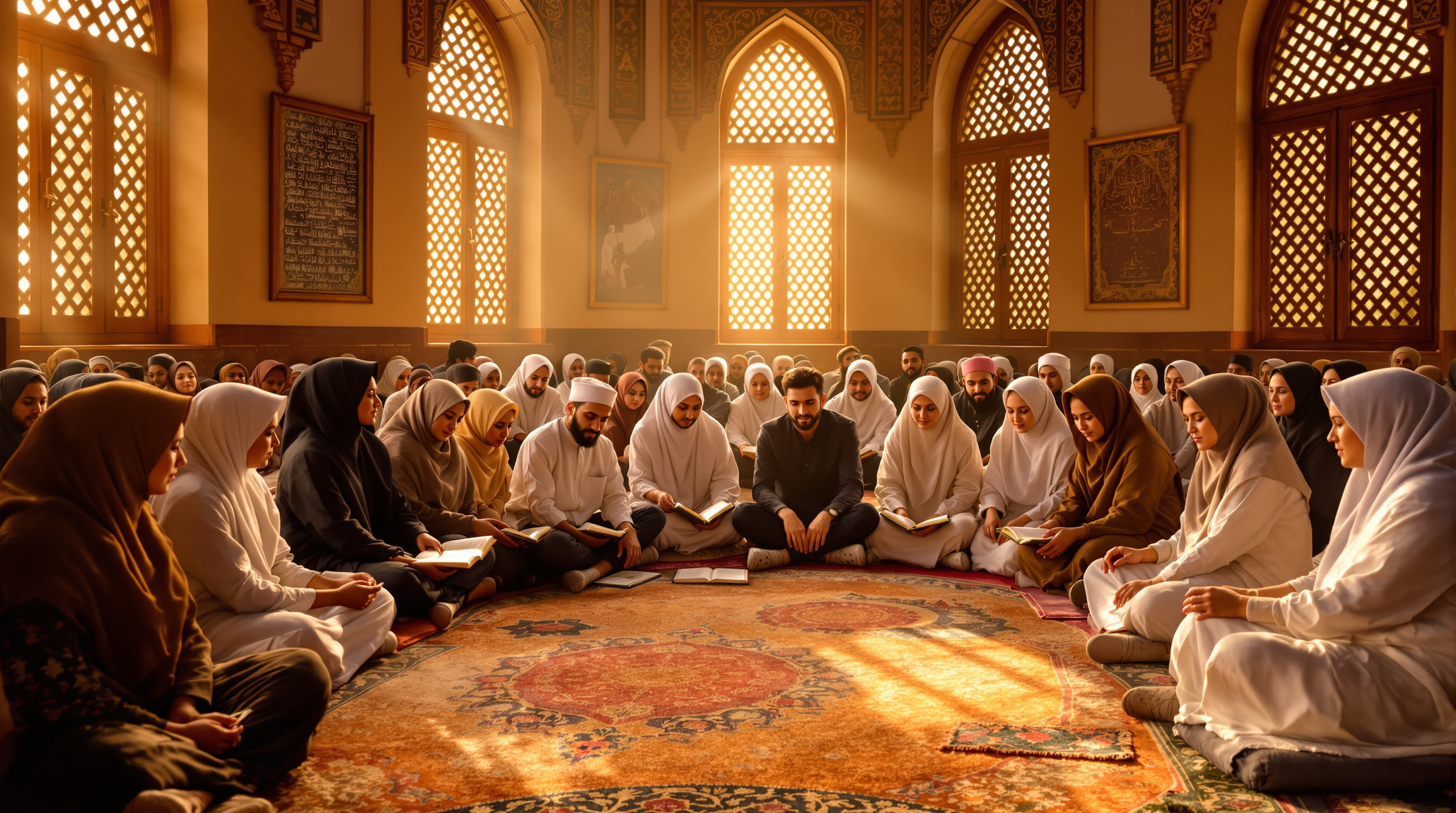
Islamic jurisprudence is the science of understanding and applying Allah’s commands as revealed in the Quran and the Sunnah. The courses below follow the Shafi’i school — one of the four accepted schools of Sunni Islamic jurisprudence, followed widely across Southeast Asia, East Africa, and Hadhrami communities worldwide.
A structured introduction to the five pillars — purification, prayer, fasting, zakat, and pilgrimage — according to the Shafi’i school.
Explore →
A five-century-old Shafi’i primer by Imam BaFadl al-Hadrami — concise, authoritative, and used continuously for centuries.
Explore →Adab — proper Islamic conduct and manners — is the expression of an inner state of love, respect, and awareness. The courses below explore adab in worship and in the dimensions of daily Muslim life.

Islam, Iman, and Ihsan — the three dimensions of the complete Muslim life, drawn from the famous Hadith of Jibril (Gabriel).
Explore →Suluk is the path of spiritual development — the inner journey toward Allah through purification of the heart, cultivation of noble qualities, and constant remembrance. The Book of Assistance by Imam al-Haddad is the foundational text of this course.

Imam Abdallah al-Haddad’s timeless guide to the Muslim spiritual life — covering certainty, patience, gratitude, hope, fear, love, and trust in Allah.
Explore →For further recommended reading and institutions offering structured Islamic education, visit the Resources page. For recorded lectures and audio teachings, visit the Lectures section.